

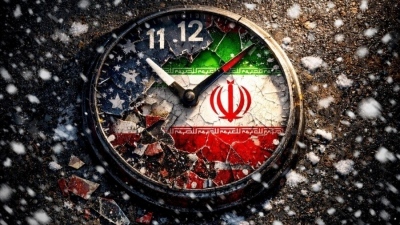
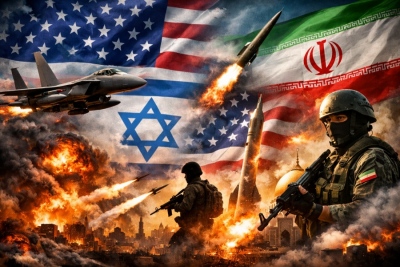
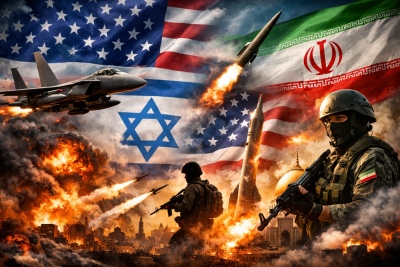
With US President Donald Trump’s five-day ultimatum for negotiations with Iran currently "running," estimates are anything but optimistic about what is to follow. Iran denies that any talks or contacts with the US exist, labeling them "fake news" while vowing revenge. Tehran continues to pound Israel and American targets in the wider Gulf region with missiles, while maintaining its threat against the Strait of Hormuz—a situation that has caused suffocation in global energy and the economy.
For his part, Trump has "frozen" the previously announced attacks on Iranian energy infrastructure, awaiting the results of the supposed negotiations. Meanwhile, he appears to be preparing his next move, which, according to various scenarios, could include a ground invasion of Iran with the ultimate goal of controlling Hormuz. Reports indicate that by this coming Friday, March 27, when the Trump ultimatum expires, approximately 2,000 US Marines will be stationed in the Middle East.
Notably, reports suggest that the United Arab Emirates and Saudi Arabia are leaning toward involvement in the war against Iran—a scenario that would undoubtedly trigger even greater chaos. Simultaneously, new reports detail how Israeli Prime Minister Benjamin Netanyahu convinced Trump to order the operation against Iran, arguing that there might never be a better opportunity to eliminate Iran’s Supreme Leader, Ayatollah Ali Khamenei.
Trump: If negotiations fail, bombings will resume
US President Donald Trump maintained that the US and Iran have held negotiations and found "points of agreement." In this context, he announced a five-day postponement of the strikes he had threatened against Iranian energy infrastructure. However, he warned that if negotiations do not bear fruit, the bombing campaign will resume.
Iran issues denial
From its side, however, Iran denies having any direct or indirect contact with American officials. The Speaker of the Iranian Parliament, Mohammad Baqer Qalibaf—whom an Israeli official and two other knowledgeable sources named as the interlocutor on the Iranian side—stated that no negotiations had taken place. "There have been no negotiations with the US, and false news is being used to manipulate financial and oil markets and to escape the impasse in which the US and Israel are trapped," Qalibaf wrote on the X platform. The IRGC (Islamic Revolutionary Guard Corps) stated they are launching new attacks against American targets and characterized Trump's words as "psychological operations" that are "outdated" and have no effect on Tehran's struggle.
Reuters: US-Iran talks in Pakistan
Nevertheless, Reuters reported that a Pakistani official and a second source stated that direct talks to end the war may take place in Islamabad, Pakistan, this week, provided there is interest from both sides. Egypt, Pakistan, and the Gulf states are mediating the transmission of messages between Iran and the US, a European official told Reuters. Iranian media reports that Iranian President Masoud Pezeshkian and Pakistani Prime Minister Shehbaz Sharif discussed the war's impact on regional and global security in a phone call on Monday morning.
Politico: Trump considers Qalibaf as potential negotiator and future Iranian leader
The administration of US President Donald Trump is discreetly considering Iranian Parliament Speaker Mohammad Baqer Qalibaf as a potential interlocutor—and even a possible future leader—within the search for a diplomatic solution to the war with Iran, Politico claims. According to American officials, Washington is attempting to identify a figure who could negotiate a deal, while Trump appears to be shifting focus from military pressure to a possible political settlement. Iran dismisses this scenario as another diversionary tactic intended to project a contradictory and fractured image of the country. According to the Tasnim agency, "the use of Qalibaf’s name was clearly aimed at creating internal divisions and conflicts among political forces in Iran."
The Guards unleash a missile storm on Tel Aviv, Dimona, and US bases
The Revolutionary Guards, in their announcement of the 78th wave of attacks, expressed their determination to "take revenge on the criminals." They report that during this attack, targets in Eilat, Dimona, northern Tel Aviv, and several bases of the "US terrorist army" in the region were struck with precision by Emad and Ghadr precision missile systems with multiple warheads, as well as destructive attack drones.
????⚡️– Insane footage of Iranian missiles passing through a large number of Israeli interceptors and hitting Ramat Gan area east of Tel Aviv. pic.twitter.com/87rN82C8DE
— MonitorX (@MonitorX99800) March 24, 2026
Furthermore, they emphasize that they are conducting... "negotiations through high-impact operations," claiming that their main units and the Basij force have not yet entered the battlefield. According to the Guards, the entry of these forces into the fight, should it become necessary, will sharpen the conflict and make calamity for the enemies inevitable. "The enemy's conspiracies to compensate for its defeats and change the balance of the war in the coming hours do not go unnoticed. Iran’s harsh blow will fall in a very short time upon the commanders, perpetrators, and supporters, at every level, of any attack or crime. We will indeed take revenge on the criminals," stated the Revolutionary Guards.
Hell in Tel Aviv – 6 injured
Buildings were damaged and cars are burning in Tel Aviv following an Iranian missile attack earlier this morning, Tuesday, March 24.
בניין בתל אביב נפגע במטח לעבר המרכז הבוקר, מכוניות עלו באש; מד"א: אין נפגעים@tuvyayagelnik pic.twitter.com/vKPDvZZ0WA
— גלצ (@GLZRadio) March 24, 2026
At least four impact points were reported across Tel Aviv, with six people slightly injured so far, according to Israel's emergency service, Magen David Adom. No deaths have been reported thus far. Information from Israeli media suggests that parts of a missile fell in Rosh Ha’ayin, east of Tel Aviv.

The Tel Aviv police commander maintained that there is extensive damage in areas where missile debris fell, while Israel's Channel 12 reported that three buildings were completely destroyed. 
Rescue teams are on-site at several impact locations, police said. The facades of several floors have been entirely demolished, with debris littering the ground below.
Israeli officials claim that the bomb that struck Tel Aviv contained 100 kg of explosives. 
Israeli officer Miki David stated that an Iranian warhead striking a street in Tel Aviv caused significant damage to three nearby buildings but did not cause serious injuries. "I am glad to say that in this incident you see behind me, which looks visually dramatic, there are only three lightly injured," he told reporters at the scene, adding that most residents had moved to a nearby shelter. Miki David also estimated that the significant damage caused by the projectile indicates it did not come from a cluster bomb, but noted it still appears smaller than the conventional, non-cluster warheads previously fired by Iran.
Iran: We have not mined the Persian Gulf
A spokesperson for Iran’s Khatam al-Anbia ruled out any plan to place mines in the Persian Gulf. "The Islamic Republic of Iran confidently holds the initiative in the Persian Gulf and the territorial waters of the Sea of Oman, and controls the Strait of Hormuz with great intelligence and power. Therefore, due to our sovereignty and sufficient strength, there will be no need to place mines in the Persian Gulf; when necessary, we will use all available means to ensure security," the Iranian spokesperson said. "The Armed Forces (of Iran), with sovereignty over the American-Zionist enemies and in cooperation with regional countries, are capable of securing the Persian Gulf, and regional countries have no right to interfere in this area," emphasized the Khatam al-Anbia representative.
Wall Street Journal: Saudi Arabia and UAE approaching active involvement in war against Iran
Saudi Arabia and the United Arab Emirates appear to be moving toward more active participation in military operations against Iran as the conflict in the Middle East drags on and intensifies. According to the Wall Street Journal, the Gulf states are "gradually approaching" a more active role in the conflict following Riyadh’s decision to allow US forces the use of an airbase within its territory. A source cited by the newspaper estimates that "it is a matter of time" before Saudi Arabia directly enters the war, recalling that the country’s Foreign Minister stated last week that the kingdom’s patience with Iranian attacks "is not inexhaustible."
2,000 US Marines in the Middle East
Thousands of American Marines are expected to arrive in the Middle East on Friday, March 27, the day the deadline Trump gave Iran to open the Strait of Hormuz expires. According to the Wall Street Journal, the amphibious assault ship USS Tripoli (based in Japan), the amphibious transport dock USS New Orleans, and approximately 2,200 Marines from the 31st Marine Expeditionary Unit will transition to US Central Command (CENTCOM), which is responsible for US forces in the Middle East, on Friday, 3/27.
It will take a few more days for the unit to reach the Strait of Hormuz. The Pentagon has also ordered the dispatch of another Marine unit to CENTCOM, the California-based 11th Marine Expeditionary Unit, which is aboard the amphibious ready group USS Boxer. This unit will depart in a few weeks and is expected to reach CENTCOM shortly thereafter.
Rasmussen (US): Americans will suffer major losses if they invade Iran
American soldiers will face heavy casualties and an armed conflict that could last for years if a decision is made for a ground invasion of Iran, including Kharg Island, argued retired US Army Lieutenant Colonel Earl Rasmussen. "A ground invasion will lead to major losses and prolong the conflict for months, if not years," Rasmussen stated. In his view, if an invasion order is issued, Marines are likely to participate in the operation.
"However, this would mean sending troops either through the Strait of Hormuz or landing from the other side of the Persian Gulf—via Saudi Arabia. Both options would be extremely difficult," Rasmussen noted. Axios previously reported, citing sources, that US President Donald Trump is prepared to seize the Iranian island of Kharg to exert pressure on Tehran with the aim of reopening navigation in the Strait of Hormuz. According to the report, a final decision has not yet been made.
Daniel Davis (US): The US has achieved none of its goals
Washington has failed to achieve any of its objectives in the conflict with Iran, stated retired US Lieutenant Colonel and military analyst Daniel Davis. "Of course, we killed many Iranians and destroyed a great deal, but we achieved none of our goals in this war: the regime change, the dismantling of long-range missile stockpiles, the destruction of Iranian Navy vessels, and, most importantly, the elimination of nuclear fuel processing capabilities," Davis stated in a post on X.
According to Davis, throughout the operations, the US has simply strengthened its adversaries due to the situation with oil, while suffering only damages itself. "Tell me, how are we winning here?" Davis asked rhetorically. He suggested that the strategic posture of the US has inadvertently provided a geopolitical advantage to rivals while depleating American military resources.
Israel pounds Lebanon
Israel targeted seven areas in the southern suburbs of Beirut overnight, according to Lebanese state media. "Enemy fighter jets carried out seven raids during the night on the southern suburbs," the Lebanese National News Agency reports, adding that seven areas were targeted. During the night, the IDF (Israel Defense Forces) repeated an evacuation warning for Beirut's southern suburbs, a Hezbollah stronghold, prior to attacks on the terrorist organization's positions.
IDF: We struck ballistic missile warehouses and Iranian regime headquarters in Tehran
The IDF reports that during waves of airstrikes on Iran yesterday and overnight, the Israeli Air Force struck ballistic missile warehouses and various headquarters of the Iranian regime. The military states that in Tehran yesterday, it hit two intelligence offices of the Revolutionary Guards and an office of the Iranian Ministry of Intelligence.
Also in the capital, IAF aircraft struck weapons storage sites and air defense systems, according to the IDF. During the night, the IDF reported hitting more than 50 targets in northern and central Iran, including sites used for the storage and launching of ballistic missiles.
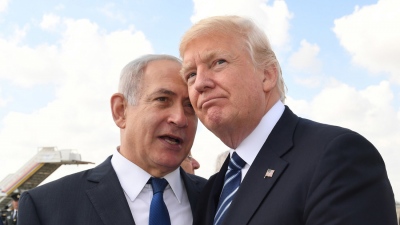
Reuters: How Netanyahu convinced Trump
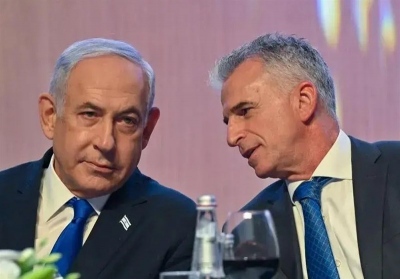
Less than 48 hours before the US-Israeli attack on Iran began, Prime Minister Benjamin Netanyahu spoke by telephone with President Donald Trump regarding the reasons for starting such a complex and distant war—one the American leader had once promised during his campaign he would avoid. Both Donald Trump and Benjamin Netanyahu knew from intelligence briefings earlier that week that Iran’s Supreme Leader Ayatollah Ali Khamenei and his key associates were soon to meet at his complex in Tehran, making them vulnerable to a "decapitation strike"—an attack against a country's top leadership, a tactic frequently used by Israel but traditionally less so by the United States.
However, new information showed that the meeting had been moved to Saturday morning instead of Saturday evening, according to three people briefed on the phone conversation. This conversation had not been previously reported. Benjamin Netanyahu, determined to move forward with an operation he had supported for decades, argued that there might never be a better opportunity to kill Ayatollah Ali Khamenei and avenge previous Iranian attempts to assassinate Donald Trump, according to the same sources. Among these was a murder-for-hire plot allegedly organized by Iran in 2024 when Trump was a candidate. The US Department of Justice has charged a Pakistani man with attempting to recruit individuals in the United States for this plot, which is considered retaliation for Washington’s assassination of top IRGC commander Qassem Soleimani.
By the time the phone call took place, Donald Trump had already approved the idea of a US military operation against Iran but had not yet decided when or under what circumstances the United States would become involved, according to sources who spoke anonymously due to the sensitivity of internal discussions. Reuters was unable to determine how Netanyahu’s argument influenced Trump as he considered ordering the attack. However, the conversation essentially served as the Israeli leader’s final argument to his American counterpart. The three sources briefed on the conversation stated they believe this—along with intelligence showing the time window for eliminating the Iranian leader was closing—served as the catalyst for Trump's final decision on February 27 to order the start of Operation Epic Fury.
www.bankingnews.gr







Σχόλια αναγνωστών